
30 Jul 26
When Cows Take the Camino: The Transhumance Festival
May is a magical time along our Camino trails, as towns and villages across Europe come alive to welcome the new season. Along the Le Puy Camino in France, spring brings a particularly special celebration to the Aubrac region: the Transhumance Festival, where tradition, community and a herd of beautifully decorated cows take centre stage.
For walkers travelling through this region, the festival offers a rare opportunity to experience a living piece of French rural heritage and witness the deep connection between local communities, their land and the animals that have shaped this landscape for centuries.
What is the Transhumance Festival?
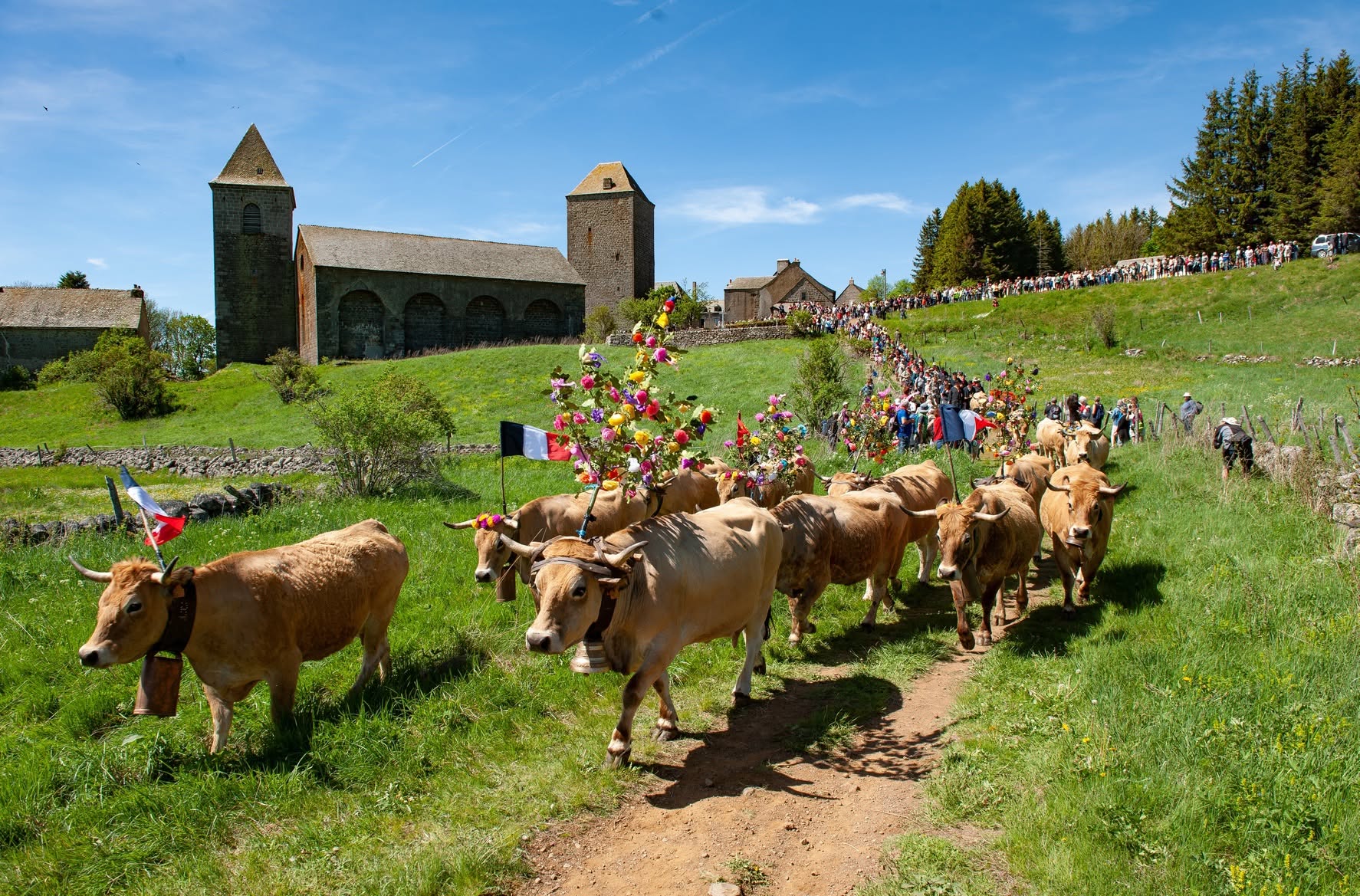
Each spring, herders guide their flower-adorned Aubrac cows from the green valleys around Saint-Chély-d’Apcher and Laguiole to the high summer pastures of the Aubrac plateau. This seasonal migration, known as transhumance, marks the movement of livestock to higher grazing grounds as the weather warms and fresh pastures become available.
Spanning up to 60km, this traditional journey has transformed into a vibrant celebration of mountain life, with music, markets and festivities taking place over several days. The event culminates in the spectacular arrival of the cattle on the plateau, where locals and visitors gather to celebrate this centuries-old tradition.
The practice dates back more than 700 years, when monks and farmers first began moving their livestock with the changing seasons. Today, the Transhumance Festival continues to honour this connection between people, animals and the unique environment of Aubrac.
The stars of the festival
At the heart of the celebration is the Aubrac cow, a golden-eyed, gentle breed known for its resilience and unmistakable charm. These hardy cattle are perfectly suited to the rugged landscapes of the Aubrac plateau and have become an iconic symbol of the region.
In the days leading up to the festival, the cows are carefully prepared for their big moment. Their coats are brushed to a shine, their horns decorated with colourful ribbons, halters woven with wildflowers and polished bells fastened around their necks. As the herd makes its way through the villages, the sound of hundreds of bells ringing across the landscape creates an unforgettable atmosphere.
A celebration of Aubrac culture
The Transhumance Festival is much more than a cattle migration. It is a celebration of Aubrac culture and community. Villages along the Le Puy Camino, including Aubrac, Saint-Chély-d’Aubrac and Espalion, come alive with open-air markets, folk music, dancing and long communal tables filled with regional delicacies.
Food is an important part of Aubrac culture, with walkers able to discover local favourites such as Aligot, a comforting dish made from mashed potatoes and Tome cheese, as well as the region’s renowned Aubrac beef. These traditional flavours offer a true taste of the landscape and the farming communities that have shaped this region for centuries. Discover more about the local flavours and regional specialities you can enjoy along the route in our guide: What to eat along the Le Puy Camino.
For Camino walkers, the festival is a chance to slow down, connect with locals and experience the traditions that make this route so unique. The Le Puy Camino is already known for its rural landscapes, historic villages and authentic French experiences, and events like the Transhumance Festival bring these qualities to life.
A traveller’s experience
For many walkers, the most memorable Camino moments are often the unexpected ones. RAW Travel guest Di Good discovered this firsthand while walking the Full Length Le Puy Camino in May 2026:
“The little taste I had of Transhumance was fabulous! I really feel that being in a town during traditional festivals is an absolute blessing. You get to experience all the joy and colour that these festivals bring to the town and their people.
My highlight with Transhumance was a funny one. I stuck around in St Chély on the Saturday morning as they were preparing for the big event on Sunday. It was all very exciting with lots of music and joy, and I was feeling a little sad to be walking on ahead.
When I got to Espalion on Saturday afternoon, I found out that one of the bigger herds would actually start from there early the next morning. I was excited to find this out, so I asked the tourist office, my accommodation and a few locals if they knew what time the Rames family would bring their herd through Espalion. No one could tell me, but they did say… ‘But don’t worry, it will be early and you will definitely hear them coming!’
So I set my alarm for 5am, got dressed, opened my window and lay on my bed waiting. By about 5.30am I heard a rumble… I bolted out of bed, and they were coming down the street right out the front of my accommodation. It was so much fun walking alongside them in the early dawn hours and I was so grateful to be there.”
— Di Good, RAW Travel guest
Walking alongside four-legged pilgrims
The Transhumance Festival captures everything that makes the Le Puy Camino so special: the unexpected moments, the local traditions and the connections made along the way. Like Di’s sunrise encounter with the herd, these are the moments that become treasured memories long after the walk is finished.
✨ Trip spotlight: Our Le Puy to Conques, Le Puy to Cahors and Full Le Puy Camino itineraries pass through the heart of the Aubrac region, where traditions like the Transhumance Festival bring the landscape and local communities to life. As this popular event attracts visitors from across France and beyond, we recommend planning ahead and getting in touch early if you’d like to include this unique celebration as part of your Camino journey.
From the ringing of bells across the plateau to the joy of village celebrations, the Transhumance Festival is a beautiful reminder that the Camino is about more than the path beneath your feet. It is about the people, traditions and unforgettable moments you discover along the way.
So, to the four-legged pilgrims who make this celebration so special, we say:
Bravo la vache!